A Variegated Fairywren male’s first moult, part 2
February 2026
Moulting into breeding plumage
I take a break from visiting Taronga zoo over the July school holidays, and I hadn’t expected him to change much from what I had observed in wild populations of fairywrens. I knew that there were often young adult males moulting into their first breeding moult late into summer (starting as late as December), and it looked as if they took somewhere between 1-2 months to moult most of the way. Some older males in the wild were already finishing their moult, and I knew the dad didn’t end up changing this year; so I was rather surprised to see the little guy with a splash of black feathers around his eyes at the end of July. I didn’t know the date of his birth, but it looked as if he might have been born earlier in the previous breeding season.
I didn’t have time on that visit to wait for a photo in the open, as it often took one to two hours of waiting to get a decent photo of him, but I did manage to catch him sitting next to his mum at nap time inside one of the bushes.
A slideshow of the partial moult, 8 photos over 41 days
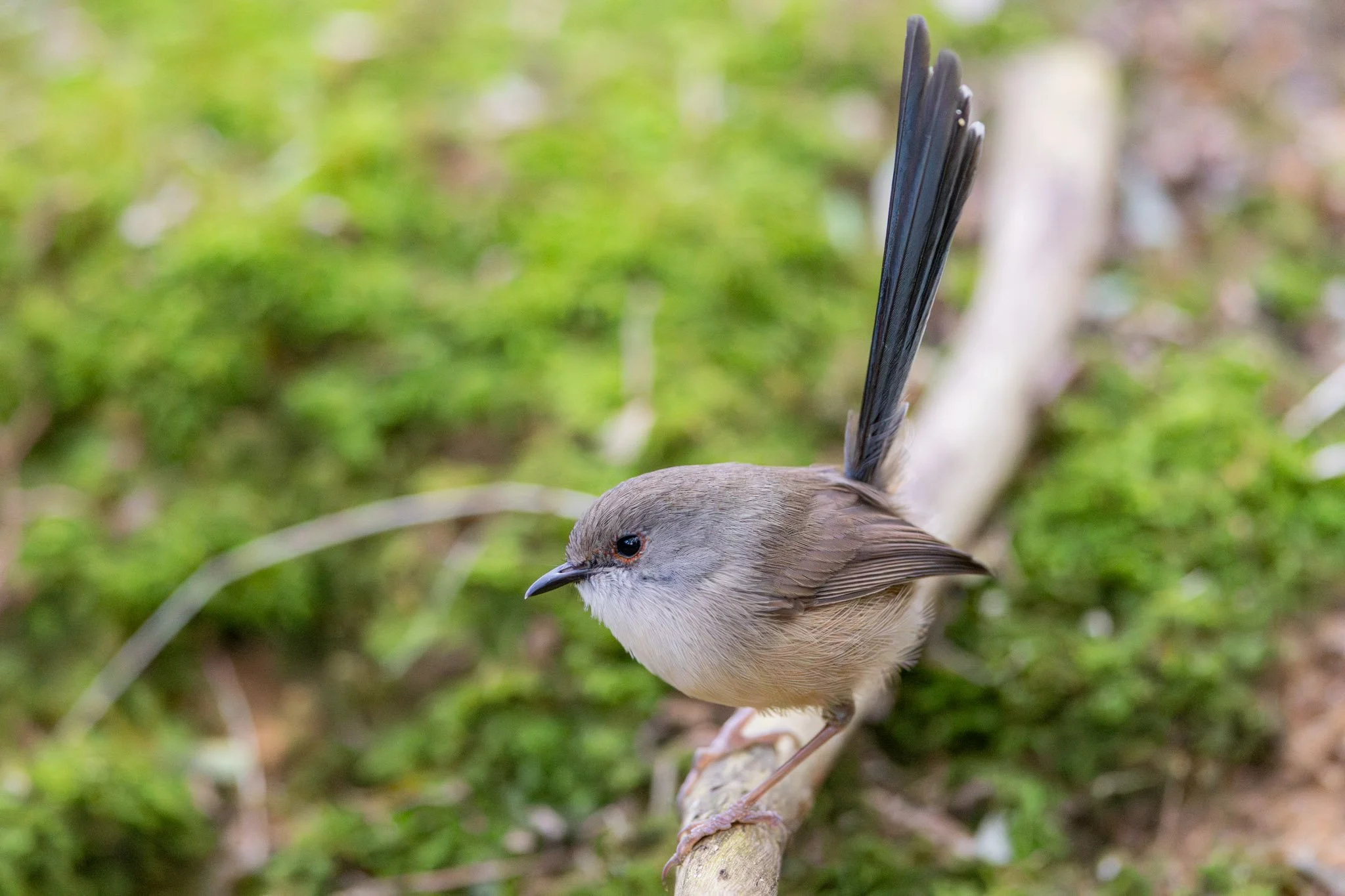

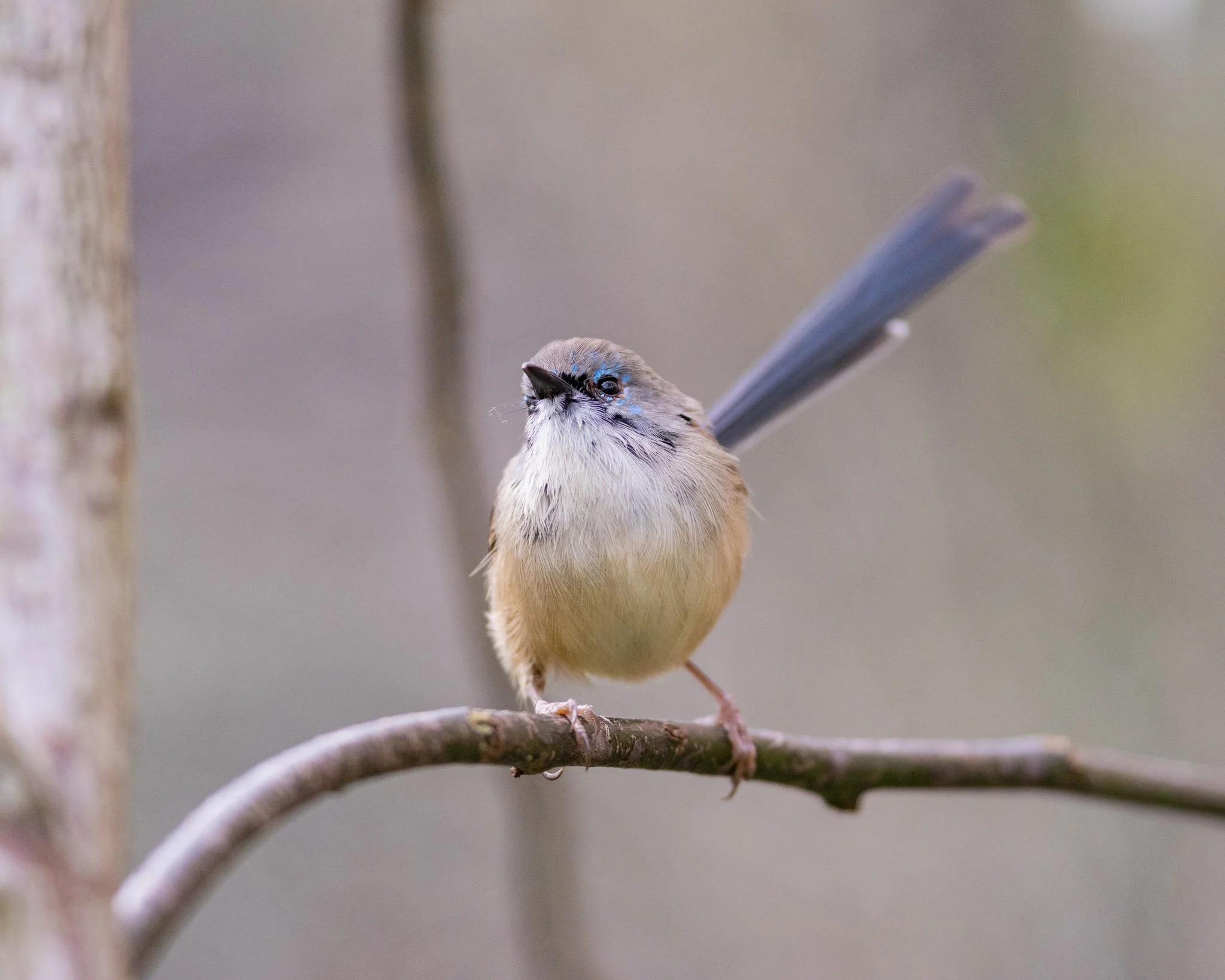
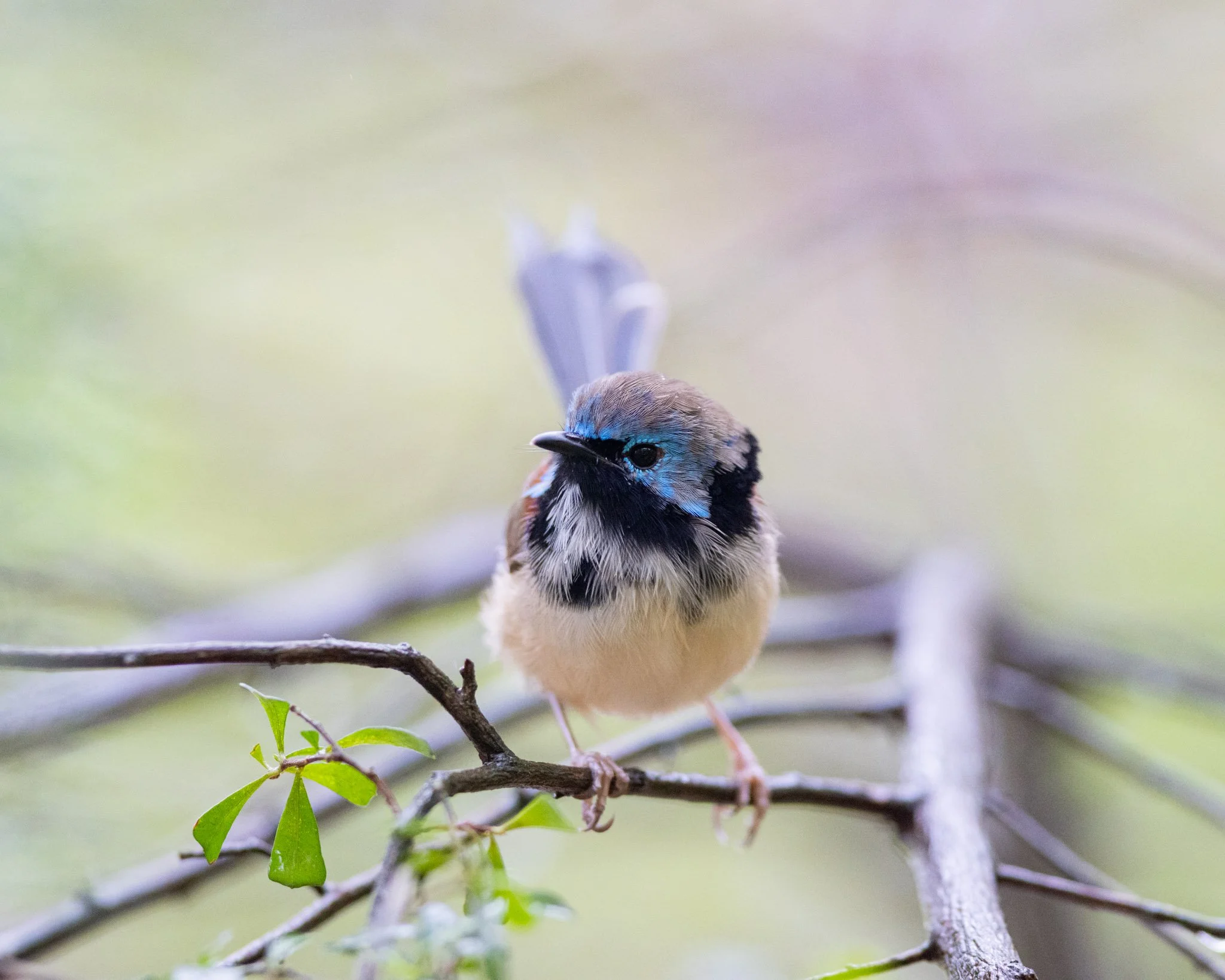
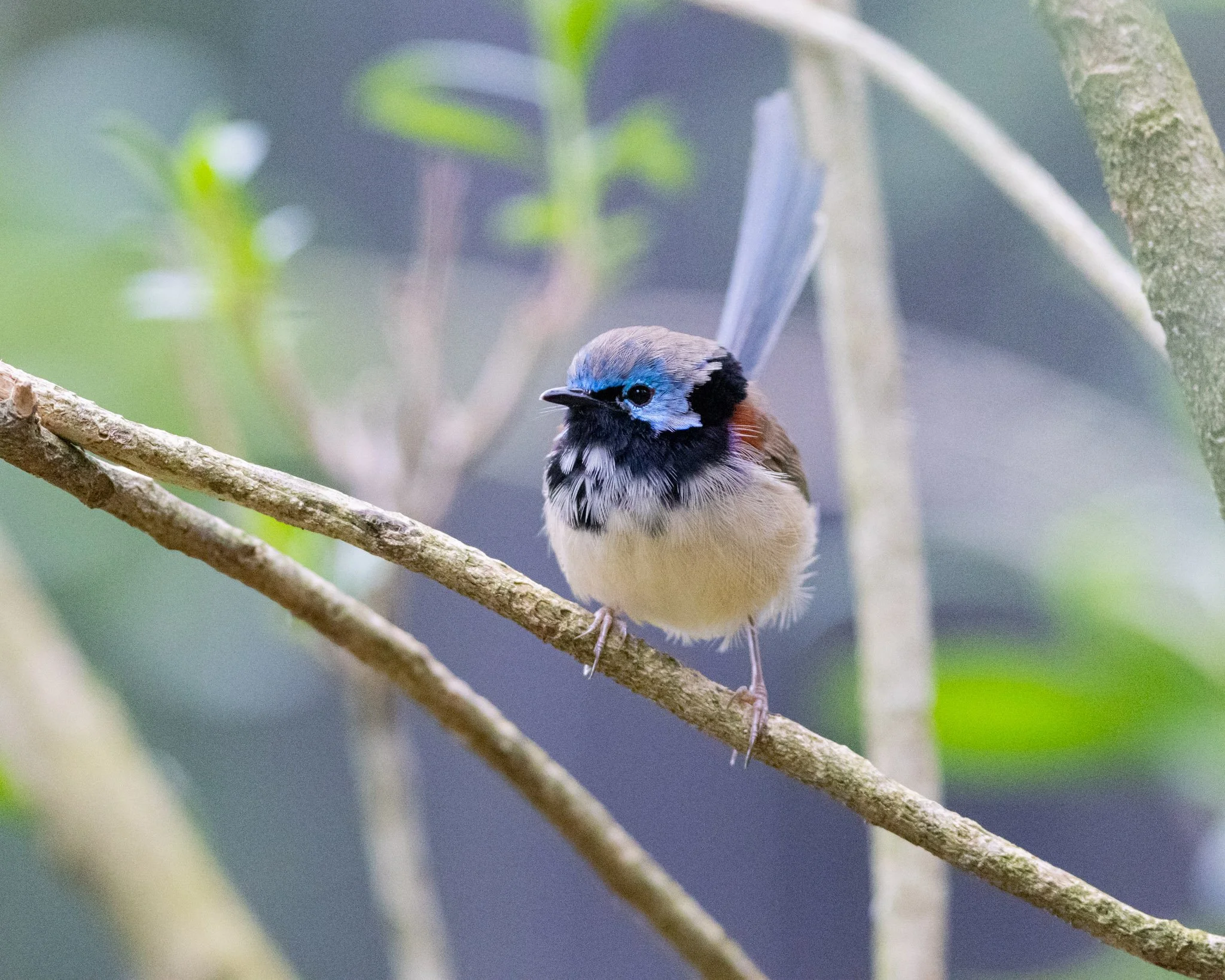
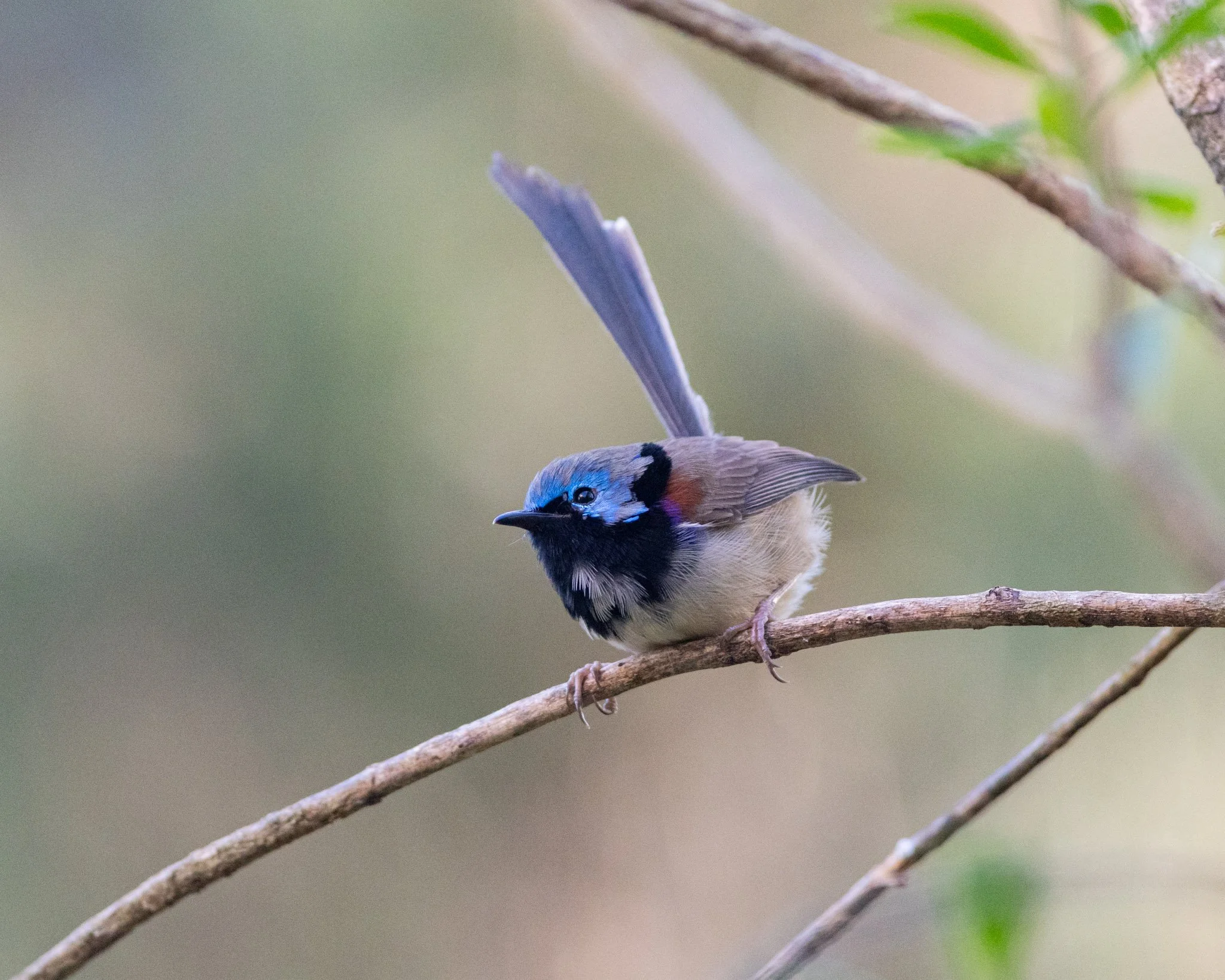
I was even more surprised the next time I had time to visit the zoo, on the 4th of August, he had a splash of blue peeking out of his plain feathers. It felt more urgent trying to capture his progress, and I definitely had a lot of anxiety about making sure I didn’t miss the focus of the shot. Some birds are easier to capture in photos, and they feel like they’re happy to pose for you, but he was one of the harder ones even compared to wild birds.
As you can see in the photos, there are some subtle differences in the three shots taken of each side, taken over the course of two hours. The bright blue and black feathers are growing out in a larger patch from below, but they are mostly covered up by the older light-brown feathers on top, which sometimes shifts as he moves around.
The next time I could visit was on the 8th of August, and there are definitely many more bright blue feathers visible around the eyes already. This makes sense as there aren’t any feathers in that area to cover up the growing feathers, and the black feathers on the chest area and the back of the head are more apparent.
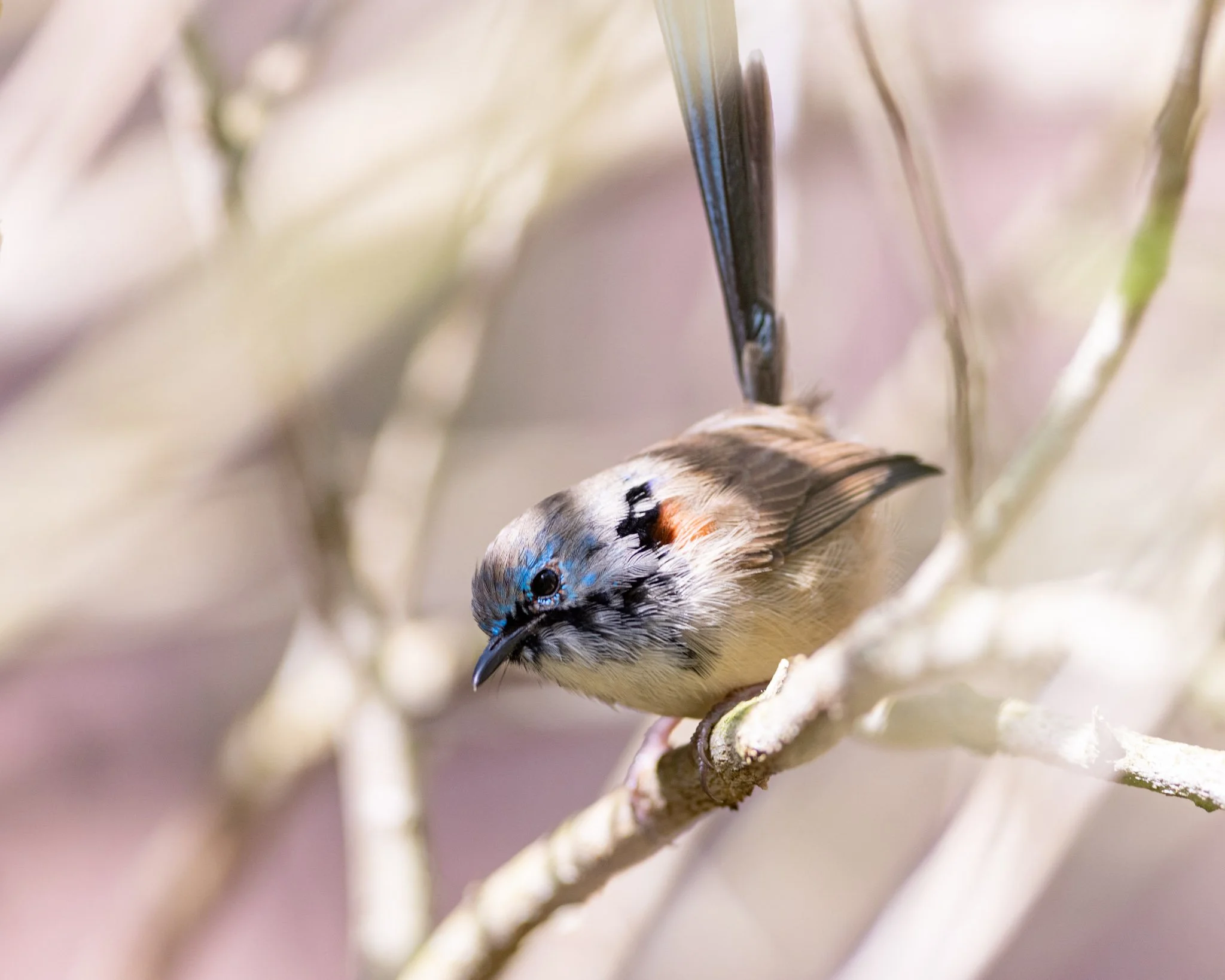
On my next visit on the 13th of August, the coverage of the adult feathers seemed to jump as you can start to see the outline of the adult moult, even if it hasn’t seemed to progress much underneath his beak and on top of his head. For Variegated fairywren males, I’ve noticed the top of the head is the last area to finish moulting, while the eyes and cheeks area happens first. At this point of the moult, the filaments of the remaining light-brown contour feathers are getting more visible as their coverage thins over the bright blue and black feathers. Although in the first two photos doesn’t show it in his pose, the third photo shows some of the red-brown feathers on the wing shoulders.
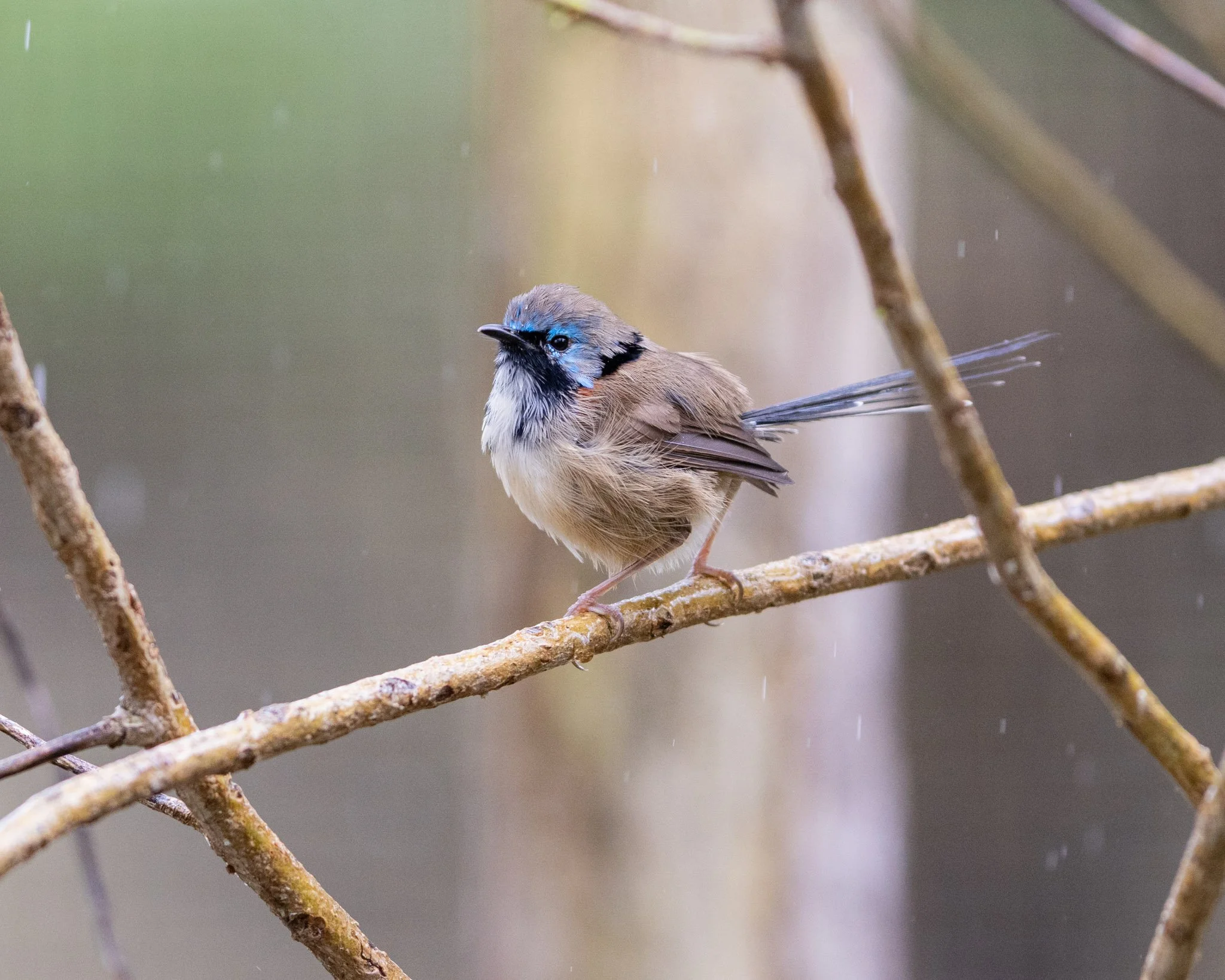
The next visit was on the 18th of August, and there was a bit of rain during my visit. It wasn’t a downpour, but it was enough to add an extra effect in the photos. Even with the dimmer diffuse lighting, as opposed to the harsher direct sunlight in the photo above, there is an increase in apparent saturation of the blue and black feathers around the beak. In the second photo while he is grooming, you can see the first sign of the purple feathers growing out behind the neck, which are not very visible when he is at rest.
While the 18th was a little wet, the 22nd of August was an uncomfortable downpour while trying to get photos. Through the two and a bit hours I spent inside the aviary, about 20mm of rain fell in the rain gauge across the harbour in Observatory Hill and I’m not sure if it was worse where I was. Even with an umbrella mostly protecting me and the camera, my backpack and my pants were absolutely soaked. In the third photo, you can see the amount of water droplets on the plants in the background.
While I was there, I managed to capture a very sweet moment of son grooming dad with his beak, although the dad is a little obscured from out of focus foliage between me and them. You can see the difference between a full breeding moult of the dad and the partial one of the son.
The next visit was on the 27th of August, and he was getting increasingly
My next opportunity to photograph him was on the 1st of September. Barely a month after he had started to show the first outward signs of his breeding moult, already he looked almost clean and neat with his new feathers. Only a few of the old brown feathers remained around his eyes, cheeks and chest, with the top of his head and his back a majority of what was missing.
This was quicker than I had expected when I had started this documentation, but it’s very difficult to track the same individual in the wild. Even though I was relatively familiar with the rough territorial extent of the various fairywren groups in my local area, I could only guess by the stages of breeding plumage I could see in the groups.
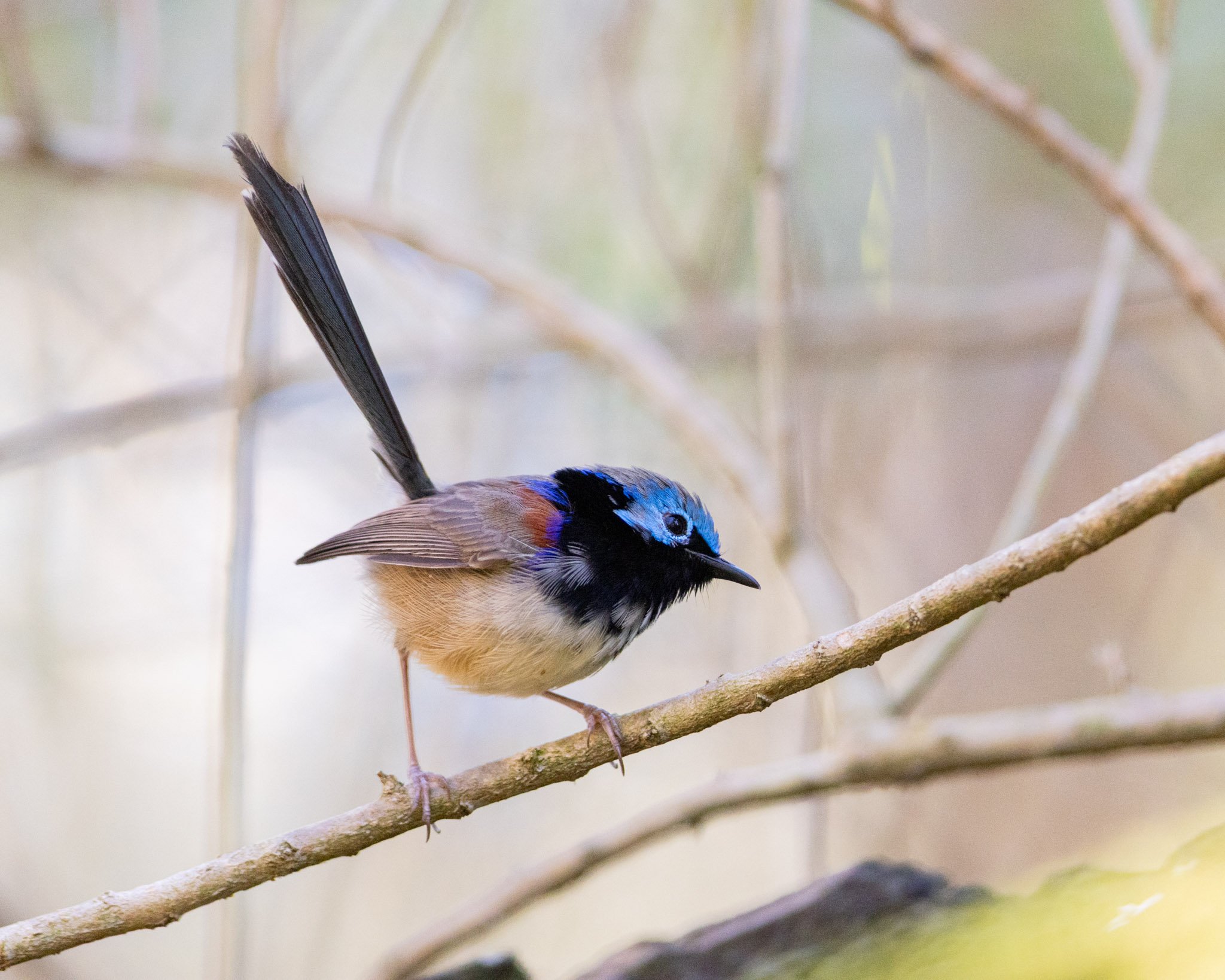
Immature Variegated Fairywren male on 1/9/25
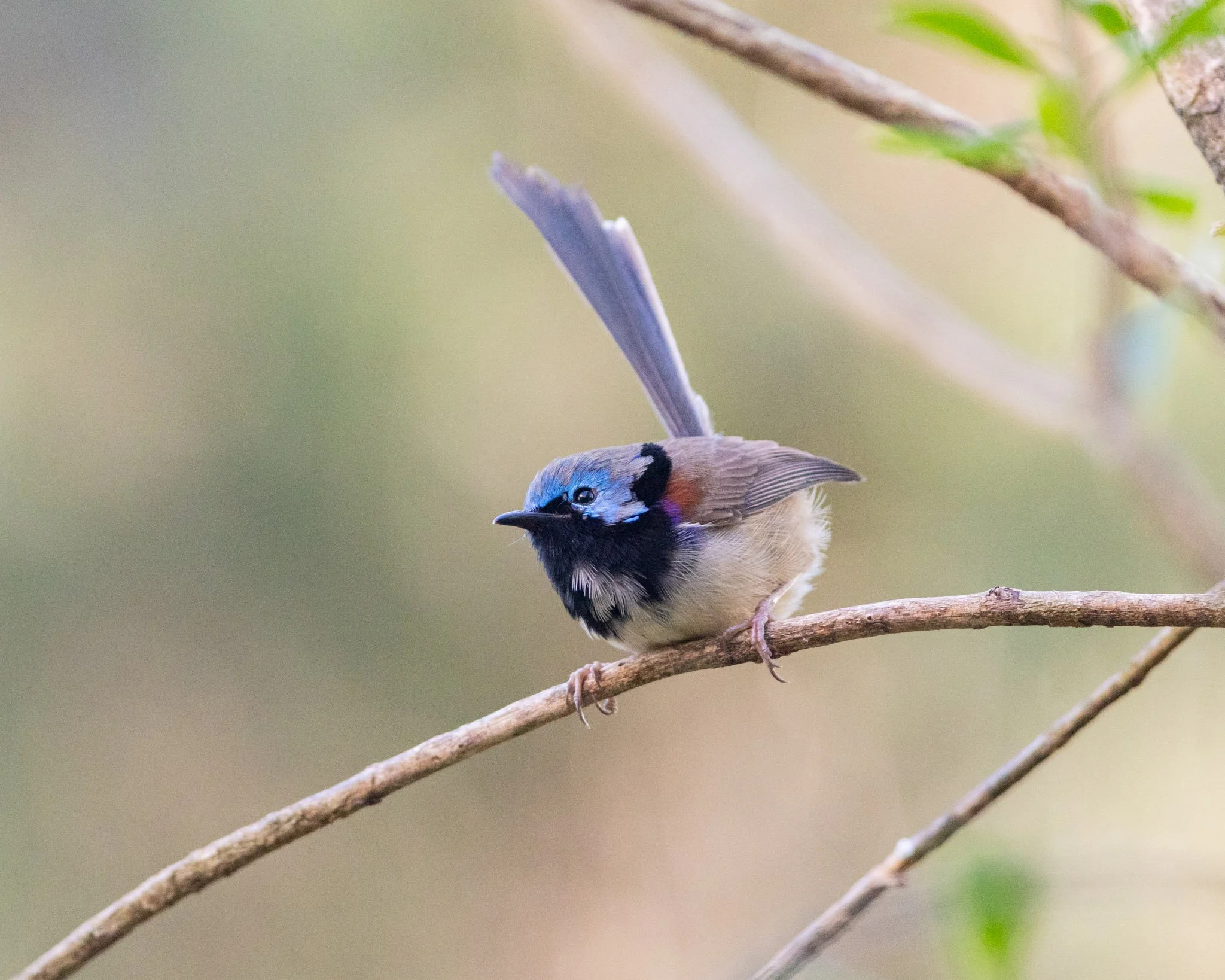
Immature Variegated Fairywren male on 1/9/25
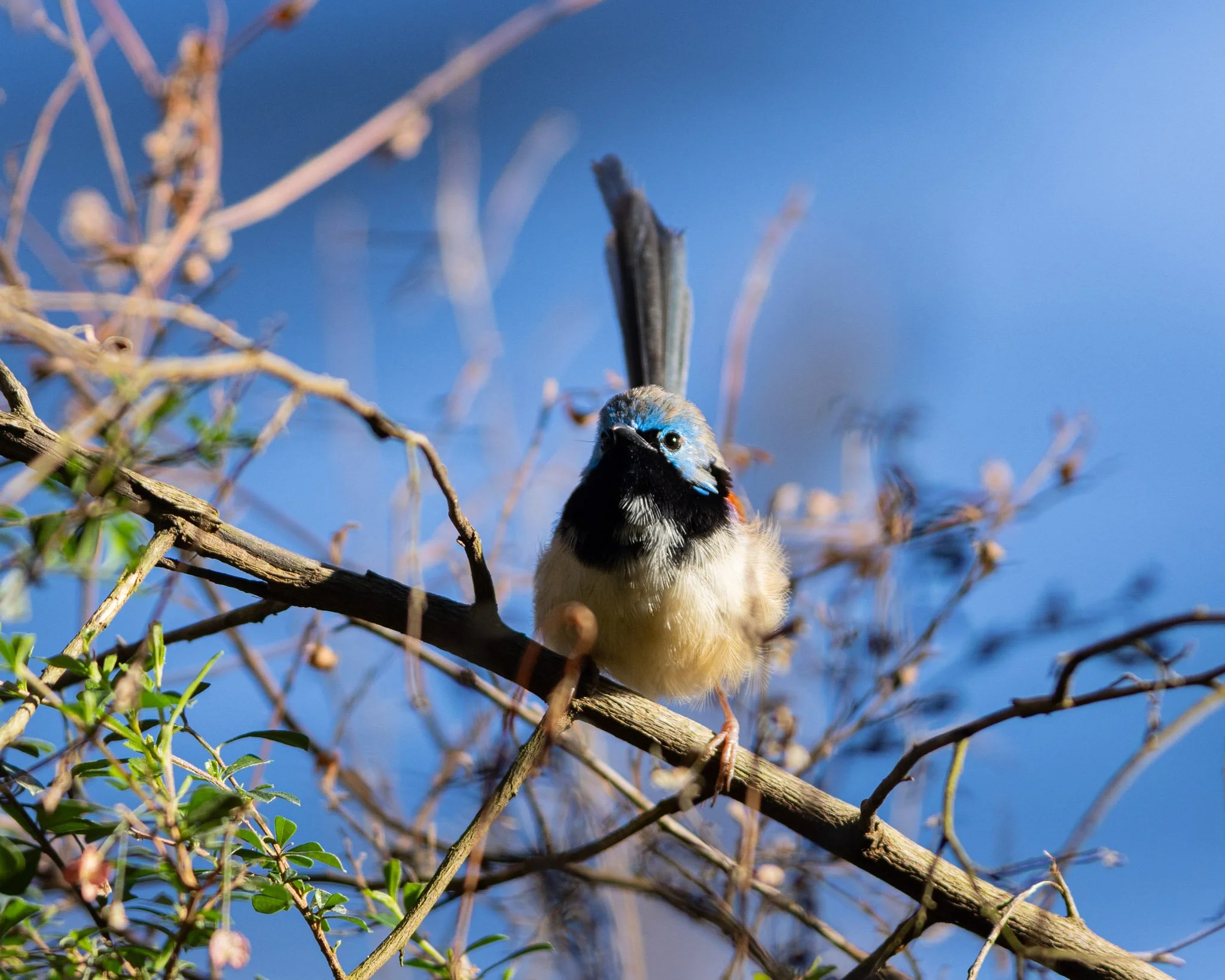
Immature Variegated Fairywren male on 1/9/25
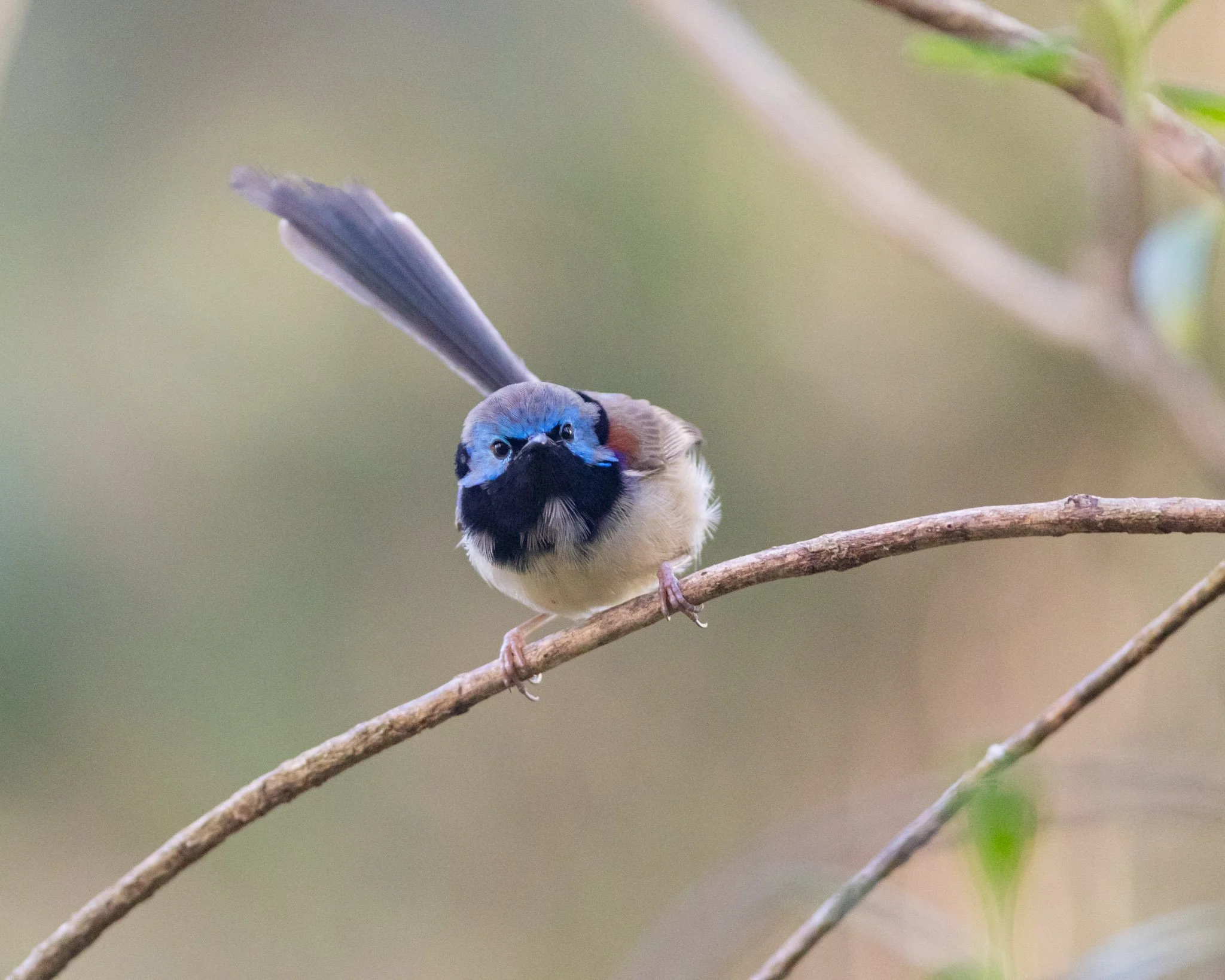
Immature Variegated Fairywren male on 1/9/25
Although I did not know it at the time, the 1st of September was the last time I would be able to photograph the young guy. This was precipitated by the passing of fairywren dad, which happened sometime between the 27th of August and 1st of September. To prevent the chance of inbreeding, given it was the start of spring, he was soon moved into another aviary off-display, leaving only mum in the aviary afterwards. When I visited again on the 5th of September, I only found one fairywren in the aviary.
It was sad to hear it happen because after spending so many hours in their presence, watching them and photographing them. I would spend a long time mostly not paying attention to the other birds in the aviary, but perking up whenever I heard their characteristic fairywren chatter and trilling. Dad was particularly impactful on me as I think he out of the three of them understood what I was trying to do, and it felt as if he would be trying to lead his son to me with little luck. And when that failed, he would bring my attention to where they were with a loud trill and a few flicks of his tail. He also had some majestic poses.
Mum in comparison was secretive, and would follow along with her partner and her son, but would mostly do her own thing away from my camera lens. Sometimes, if she felt in the mood, she would jump in front of my view and give me some poses. But it felt to me that she preferred to stay in the denser branches where it was a challenge to see her clearly, let alone photograph her. Despite that, she was willing to let me see some of those intimate moments where she napped with either her son or her partner, and it made those moments feel more precious.
I think I had expected it to happen eventually when the dad didn’t appear to have moulted into non-breeding colours over autumn, but it was still an unhappy surprise when I had the news confirmed by a zookeeper. Following are some of my favourite photos taken over the time I was photographing this fairywren family.
Farewell to fairywren dad who felt larger than life, and thank you.
Immature Variegated Fairywren male on 1/9/25, looking away into the distance.
Adult Variegated Fairywren male, dad, on 22/8/25. My favourite photo of him.
Adult Fairywren female, mum, on 4/8/25. My favourite photo of her.
Adult Variegated Fairywren mum and dad resting together, on 7/5/25. My favourite photo of them both together.
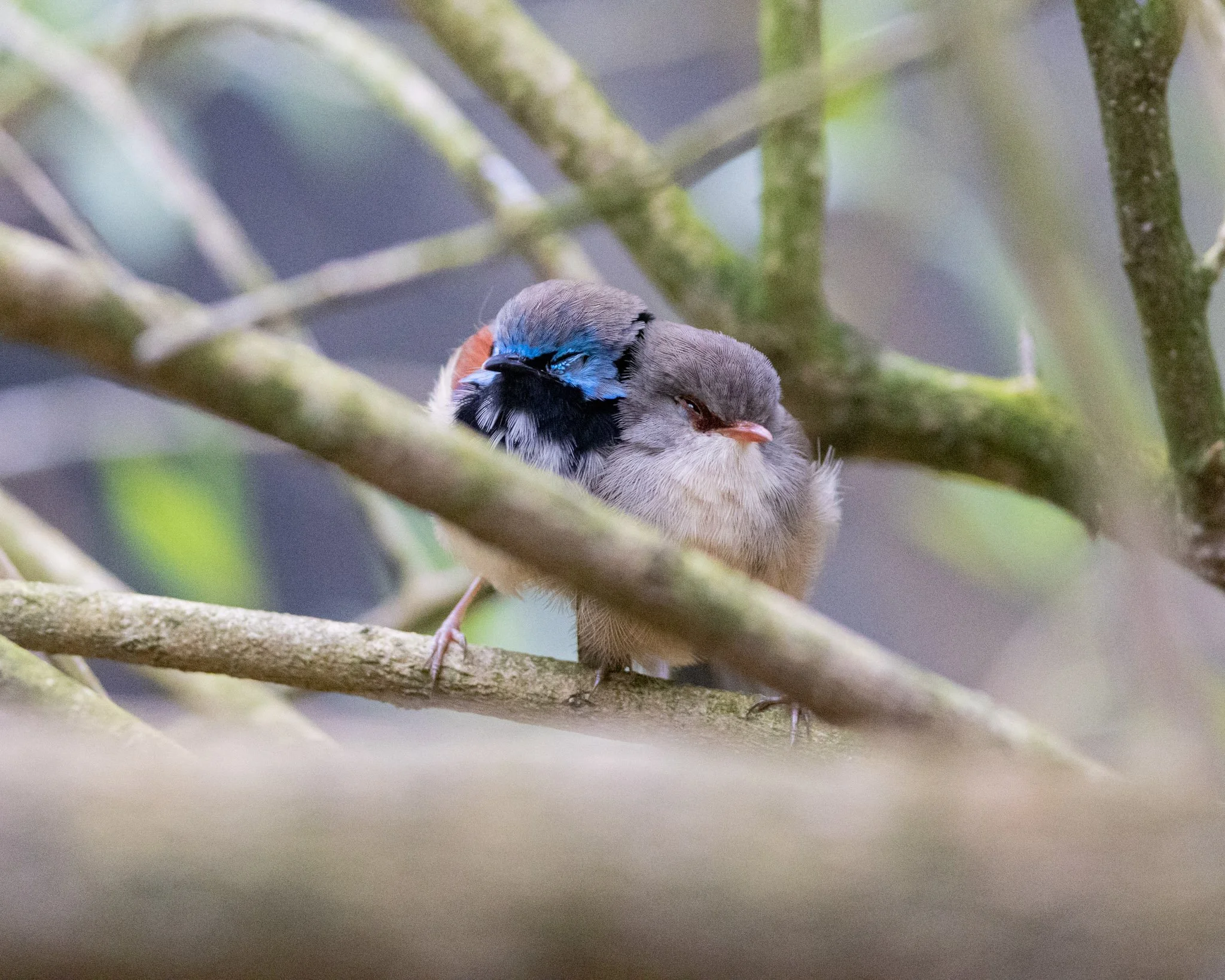
Immature Variegated Fairywren male napping with mum on 27/8/25. When they were napping, one of them would often be pushing against the other one.
I would like to say thank you to Taronga Zoo who maintains such interesting walk-in aviaries, without which this project wouldn’t have been possible, and the zookeepers and volunteers who work there, who were happy to answer my questions and let me talk about this project.
Written by Nikki Leung, 2026
Photos by Nikki Leung, 2025